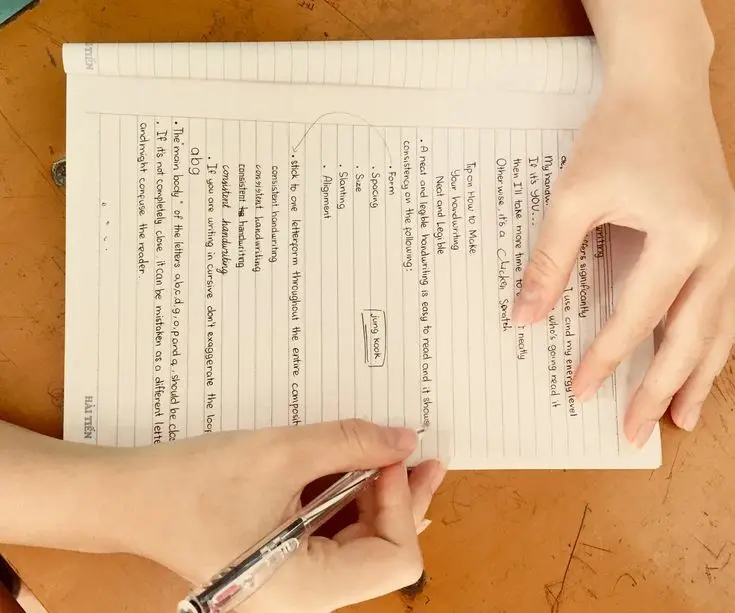
Many students know the correct answers, but when they get their work back, their writing looks rushed and unorganized. In many cases, their responses become difficult to read and lack proper spacing and sentence structure.
Poor handwriting does not always mean a student lacks knowledge. Most of the time, students simply struggle with letter formation, spacing, posture, or motor control. These small issues can make their writing look untidy, even when they understand the subject well.
The good news is that handwriting can be improved. With the right habits, regular practice, and a little patience, students can make noticeable progress in both exams and daily school work.
Handwriting Still Matters in School
In today’s world, typing and computers are everywhere. Even so, schools still expect students to write classwork, homework, tests, and exam answers by hand. In many schools, neat handwriting is still seen as a sign of discipline, effort, and presentation.
Clear and legible writing helps students in two important ways. First, it makes their work easier to read. Second, it helps them stay more organized while answering questions.
A neat answer sheet always creates a better impression than a messy one. Teachers can read the work more easily and spend less time trying to understand what the student meant. This can make a bigger difference than many students realize.
It also helps during revision. If students cannot read their own writing later, much of their effort in class goes to waste.
Common Reasons for Poor Handwriting
There are several reasons why students may struggle with handwriting.
One common reason is an incorrect grip. Many students hold the pencil too tightly, which makes the hand tired and stiff after writing only a few lines. As a result, the writing becomes shaky and untidy.
Another reason is speed. Some students focus only on finishing quickly instead of writing clearly. When they rush, the quality of their handwriting usually drops.
Posture is another important factor. If a student sits in an awkward position, bends too much, or places the notebook incorrectly, handwriting control becomes difficult.
Lack of practice can also be a major reason. Many students spend more time memorizing answers than actually writing them. Then, during exams, their hand cannot keep up, and their handwriting becomes messy under pressure.
A Step-by-Step Strategy for Handwriting Improvement
If you are wondering how to improve handwriting, start with the basics.
First, focus on letter formation. Each letter should be clear and easy to recognize. Handwriting often looks untidy when letters are formed differently each time. Students do not need decorative handwriting. They simply need writing that is neat, consistent, and readable.
The next step is spacing. Words should be written with proper space between them. Even decent handwriting can look messy if the words are too close together.
After that, work on letter size. If one word is large and the next is tiny, the writing looks uneven. Keeping letters the same size improves the overall appearance of the page.
Students should also remember that neat handwriting develops more effectively through slow and careful practice. It is better to write one page neatly than to rush through several pages carelessly.
A simple exercise is to copy one short paragraph from an English textbook every day. This helps students practice shape, spacing, neatness, and consistency.
Handwriting Improvement Techniques for Daily School Work
Small daily habits are usually more effective than long lectures or forcing students to write too much.
1. Improve the Grip
The pencil or pen should be held gently, not too tightly. Fingers should stay relaxed so the hand can move more smoothly.
2. Correct Posture
Students should sit properly with both feet on the ground. The notebook should be placed at a comfortable angle. Poor posture is one of the most overlooked causes of bad handwriting.
3. Use Lined Paper
Lined paper helps students keep letters straight and evenly sized. This is especially useful for younger children.
4. Practice Basic Strokes
Students should practice straight lines, loops, circles, and curves. These simple exercises improve hand control and letter formation.
5. Focus on Neatness Before Speed
Writing fast should not be the first goal. Students should first learn to write clearly. Speed will improve naturally with time and practice.
6. Copy Short Paragraphs
Copying short paragraphs helps students develop rhythm, spacing, and consistency in their writing.
7. Review the Writing
After every practice session, students should look at their work and notice what needs improvement. This helps build awareness and encourages progress.
8. Practice Exam-Style Writing
Students should practice writing answers in a timed setting once or twice a week. This helps them stay neat even under exam pressure.
A Simple Daily Practice Routine
Handwriting practice does not need to take a long time. A 10 to 15 minute session is enough for most students.
Start with two minutes of lines and curves. Then spend five minutes practicing difficult letters or words. After that, copy one neat paragraph from a school book.
Before finishing, choose one thing to improve the next day. It could be spacing, letter size, or keeping the writing on the line. This kind of focused practice works much better than making a child write pages without any clear purpose.
A Practical Example
Take the example of a Class 6 student named Anup who is preparing for school exams. Anup performs well in Science and English, but his notebooks are always messy. His teachers struggle to read his writing, even though he knows the answers.
His mother decides to follow a 15-minute daily handwriting practice plan. She helps him improve his grip, posture, and spacing. He also copies one neat paragraph every day.
The change does not happen overnight, but it is real. Over time, his writing becomes clearer, his spacing improves, and he feels more confident while writing in class and exams.
Conclusion
Every child can improve their handwriting with the right support and regular practice. Neat writing helps students in exams, classwork, homework, and revision. It makes their work easier to read and helps them express their ideas more clearly.
Messy handwriting should not be treated as laziness. In most cases, students simply need better habits, correct technique, and patience. Once they improve the basics, their confidence often improves as well.
At Wisely Tutors, we understand that handwriting is closely linked to confidence, study habits, and classroom performance. You can book a demo or consultation to help your child improve handwriting, written expression, and overall school preparation.